
Addressing Consent-based Challenges to Improve Inclusivity in Research
The ACCORD Project

DISCLAIMER
Any questions you may have about legal information within this article should be discussed with your attorney or legal counsel at your institution. SPIRIT is an educational resource ONLY and is not meant to substitute research ethics oversight or approval.
Dr. Victoria Shepherd is the Principal Research Fellow from Cardiff University
She is also a registered nurse based in the Centre for Trials Research where I lead research to improve the inclusion of under-served populations, with a particular focus on populations and settings where informed consent can be challenging including the use of alternative models of consent.
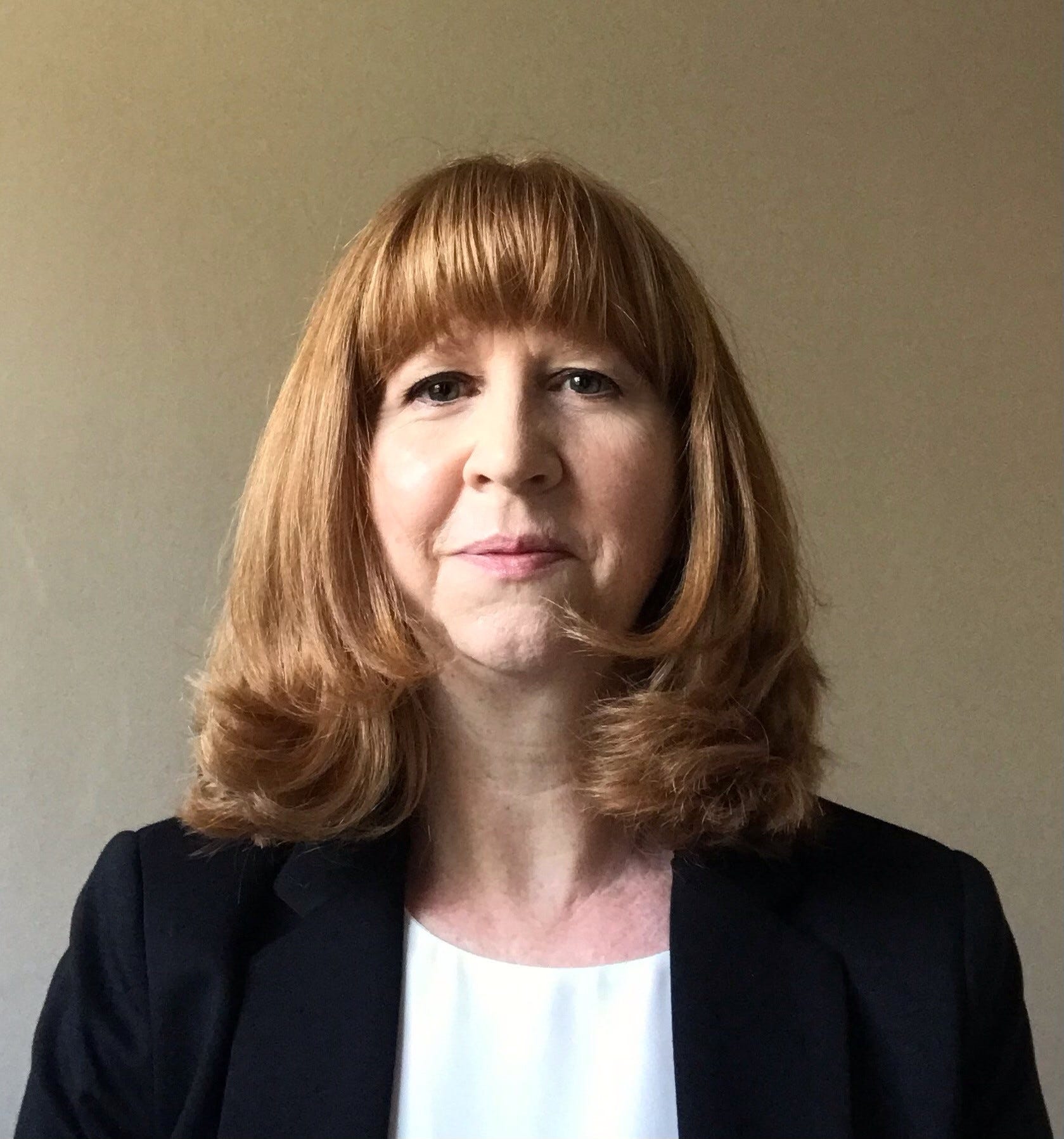
Her research entails exploring the ethical, legal and practical issues around research involving adults who lack capacity consent and the development of complex interventions to address the barriers to inclusion.
In this interview, we will learn about the ACCORD project.
For those hearing about ACCORD for the first time, what is the project trying to accomplish, and why is it different from previous work in this area?
We know that people living with conditions and disabilities that can affect their ability to consent to research are frequently excluded from studies that are relevant to them. For example, 1 in 3 patients with a hip fracture have cognitive impairment yet 8 out of 10 randomised controlled trials (RCTs) exclude or ignore this population, and 40% of older adults presenting to emergency departments have cognitive impairment but this population is excluded from 25% of RCTs in emergency care. There are similar patterns in research into neurological conditions, palliative care, dementia, stroke and beyond.
This exclusion is primarily due to the complex governance and practical arrangements needed to conduct research involving adults who lack capacity to consent which means it is more challenging to conduct these studies. This can lead to researchers excluding participants who are unable to provide consent, or studies that do involve them taking longer to receive the necessary approvals, can struggle to recruit, and may end up recruiting people who are more able to provide their own consent.
Previous work in the UK has focused on developing tools and resources to help researchers design and conduct studies that include adults with impaired capacity to consent, including the CONSULT programme that I lead. But we also know that there is real uncertainty about how to interpret the ethical and legal frameworks that govern research involving adults lacking capacity to consent, and that behaviour plays an important role.
ACCORD (‘Addressing Consent-based Exclusion to Improve Inclusivity in Research’) is an 8-year project funded by the Wellcome Trust which aims to understand how the ethical and legal frameworks are currently being implemented in the UK through analysing study documents, conducting interviews and focus groups, and observing research ethics committees (RECs/IRBs). We will then identify the ethico-legal issues and behavioural influences that limit inclusion, and co-design interventions in collaboration with public and professional stakeholders to target individual-level and system-wide barriers. Engaging with policymakers and a diverse range of people with lived experience and focusing on implementation will help ensure national and international impact.
Many people who lack capacity are excluded from research not because researchers don’t want to include them, but because the consent process is difficult to navigate. What motivated you to dedicate an eight-year program to addressing this issue?
Exclusion occurs partly because of the complexity of the regulation of research involving adults with impaired capacity to consent. With differing frameworks depending on the type of research, and where it is being conducted, it is no surprise that they are widely misunderstood. Unlike other areas of law, in most countries there is no case law to help interpret the complex legal provisions. Researchers, clinicians, ethics committees, and participants’ families struggle to navigate this complexity.
There is also a lack of knowledge amongst researchers and other groups about the ethical and legal frameworks, which leads to misinterpretation when applying them in practice. This further adds to the complexity that drives exclusion. Alongside this, research itself is increasingly complex, including platform trial designs and use of routine data, with implications for consent.
Given the complexity involved, a larger programme of work is needed which builds on the foundations of the previous work and takes account of the wider influences across the research system. The length of the project enables us to combine empirical research with conceptual exploration, and to develop and implement theoretically informed and evidence-based interventions to address the barriers to inclusion.
You often describe this as a problem of inclusivity rather than simply consent. Can you explain that distinction?
There is a growing recognition of the impact of a lack of inclusivity in health and care research, which leads to some groups being under-served by research. In order for the benefits of research to be distributed equitably, all populations should have the opportunity to be included in research that is relevant to them. Having unrepresentative study populations also affects the validity of a study as the results may not be generalisable to the clinical population as groups may respond differently to an intervention, and the balance of risk and benefit may not be so favourable for these groups. Consequently, improving inclusion of under-served groups in research is a priority for research funders, regulators, and policymakers.
While questions about exclusion are commonly considered with respect to sex/gender and ethnicity, this must be extended to consider other demographic factors such as disability and cognitive status where the issues encountered are even more complex. Key to ethical inclusion is finding the balance between protecting this population from unnecessary harm whilst ensuring they have equitable access to evidence-based - not evidence-biased - care.
Framing consent-based exclusion as an inclusivity issue, rather than simply a consent issue, enables us to consider the wider ethico-legal issues and systemic influences that affect the protection-inclusion balance, and also to harness the impetus for change driven by research funders, regulators, and policymakers.
Your work suggests the greatest barriers aren’t always the regulations themselves, but how they’re interpreted. What have you learned about that gap?
Whilst the regulations themselves can be problematic, we know that uncertainty about how the regulations are interpreted leads to gaps between legislation, policy and practice. This misinterpretation occurs right throughout the development, governance, and delivery of a study. This includes at the study design stage when interpreting the requirements for a study involving adults lacking capacity to consent, then navigating ethical approval processes, approaching potential participants with impaired capacity, undertaking an assessment of capacity to consent, involving an alternative decision-maker (a ‘proxy’ or ‘legal representative’), and when revisiting consent throughout the study.
This manifests in multiple ways, including incorrect use of terminology, study documents lacking essential information, being uncertain about who can act as an alternative decision-maker, miscommunicating the legal basis for their decision, and implementing unnecessary or inappropriate processes and documents. This creates what researchers have previously described as a ‘black box of horrendousness’ and contributes to the decisional and emotional burden experienced by some family members when acting as a proxy or legal representative. It directly impacts the beliefs and behaviours of researchers, practitioners, and governance organisations, leading to them ‘writing their own rules’ around inclusion. This results in different approaches being used for comparable contexts, with many adopting a more rigid approach than the law permits which limits inclusion.
Sometimes there is a real lack of consensus amongst the research community about how the regulations should actually apply, or whether they are ‘fit for purpose’. This is also something we will be considering throughout ACCORD which may lead to recommendations for policy or legislative changes.
The project involves researchers, clinicians, ethics committees, governance organizations, and families. Why was it important to include so many different perspectives?
Previous work has identified that the barriers to inclusion occur across the research system and involve different interacting actors (researchers, clinicians, ethics committees, governance organisations, and families) whose relationships are characterised by complex and dynamic interdependencies. For example, unless researchers design a study to include adults lacking capacity to consent, or an ethics committee give approval for the study to do so, those delivering the study are unable to recruit them and vice versa - even if the study is designed and approved to include adults lacking capacity to consent, unless the research team is knowledgeable and confident in approaching and recruiting them, the study will not include any participants lacking capacity. Involving these different perspectives means that the barriers can be understood and addressed across individual, organisational and system-wide levels.
IRBs are often viewed as gatekeepers, yet they also have a responsibility to facilitate ethical research. In your view, how can IRBs (or research ethics committees) move beyond simply identifying risks to actively enabling the ethical inclusion of populations that have historically been excluded from research?
As a member of an ethics committee, I understand the important role they play and that finding the right balance between protecting the rights and interests of participants and facilitating ethical research is not straightforward. I sometimes hear ethics committee members expressing frustration that a study has exclusion criteria that only allows participants who are able to provide their own consent to take part. At the same time, researchers fear what they think a REC/IRB’s reaction will be if they submit an application for a study that includes participants who lack capacity to consent. Researchers described this experience to me as sometimes being a ‘brutal’ experience or a ‘baptism of fire’. This included situations where RECs/IRBs raised concerns about the processes being proposed, although researchers considered that they had adhered to the legal frameworks to the best of their ability to interpret the requirements, which researchers viewed as gatekeeping practices.
From a behavioural perspective, we know that peoples’ decisions are influenced by the anticipation of regret and, in general, people are regret-averse which can result in risk-averse choices – in this case avoiding the ‘black box of horrendousness’ if possible! There can also be a status quo bias, where it can feel more ethically justifiable to keep things as they are, such as continuing to exclude adults lacking capacity to consent. This can affect ethics committee members (as well as researchers and others) leading to a tendency towards paternalism over proportionality.
RECs/IRBs can help to create an environment that is supportive of researchers who are attempting to navigate the complex regulations, where open communication is welcomed, and where inclusivity is viewed as a core ethical issue. RECs/IRBs can also reflect on how to find the right balance between protecting the rights and interests of participants and facilitating ethical inclusion of populations that have historically been excluded from research. This might be through considering key questions when reviewing studies, such as who is affected by the disease or condition being studied, do the aims and design of the research mean that the findings will be generalisable to these groups, how might the study processes enable or prevent these groups from taking part?
Looking beyond the UK, do you think the challenges ACCORD addresses are universal, and could the project’s findings influence international research practice?
The challenges of ethically including adults who lack capacity to consent in research are universal, although there are key contextual issues to consider such as jurisdictional and cultural differences. In ACCORD we will also be exploring the application of the findings to other international contexts. This will include exploring how the conceptual frameworks we develop align with differing ethical and legal frameworks, and whether the interventions can be adapted for other international contexts. We would welcome further international collaborators who have an interest in this area. We will also be exploring whether the methodological approach and findings can be extended to research involving other populations who are considered ‘vulnerable’ participants such as children.
When the project concludes, what impact do you hope it will have on research ethics and participant inclusion worldwide?
As a global ageing population brings rising prevalence of conditions affecting decisional capacity, unless the issues driving exclusion of adults with impaired capacity to consent from research are better understood, research will fail to meet tomorrow’s health and care needs. When ACCORD concludes, the hope is that we have created a national and international paradigm shift in understanding the barriers to the ethical inclusion of this under-served group, implemented effective interventions that help target individual-level and system-wide barriers, built research capacity in this interdisciplinary research area, and ultimately that research is better able to meet future populations’ needs.